
Mineral County Multi-Day Arrest Log
No searchable Mineral County booking log or weekly blotter exists on the web. The Mineral County Sheriff site offers contact and public-safety pages, nothing that rolls. A blank search result means just that. It never proves an arrest-free week in Mineral County. The sound approach is fixed: set your date range, then ask the proper custodian directly.
Custody here is regional, too. Mineral County's sheriff may hold the arrest report. An outside jail keeps the booking, bond, and release entries. Secondary sources point toward Rio Grande County Jail, but arrangements can shift. Your weekly arrest log should name both agencies. It should also record the type of date each one reports.
Read Mineral Arrest Records Chronologically
Dates mean different things in these records. The receiving jail's entry can lag hours behind the actual arrest in Mineral County. A court filing comes later still. A release line might reflect bond, a transfer, or a finished hold, and a name dropping off a brief web view proves none of those things.
- Set exact start and end dates, including the full weekend or holiday period.
- Request arrest or incident records from Mineral County and ask for the arresting agency and timestamp.
- Request entrance, booking, transfer, bond, and release information from the receiving custodian named by the sheriff.
- Match records by number, date, agency, and identity fields, not by name alone.
- Check the Colorado court docket for later events using the county and date filters.
- Record when each source was checked and retain any correction or sealing notice.
Chasing one event instead of a whole week? Start with the Daily Arrest Report instead. Daily checks suit breaking calls; a weekly reconstruction demands fuller dates, clear provenance, and room for later updates.
Mineral Arrest Log Entry Fields
This list covers what to request, not what any site claims to display. Colorado's daily jail-record law sets the core inmate fields. The county and the receiving facility may keep related records apart.
| Log field | How to interpret it |
|---|---|
| Arrest date/time | The alleged event’s local custody point. |
| Entrance date/time | Receiving-jail intake, which may lag transport. |
| Arresting agency | The office responsible for the arrest record. |
| Booking or incident number | The best link between agency records. |
| Charge and code | The charge as booked, subject to court change. |
| Bond | Amount and type if set, modified, or posted. |
| Hold or detainer | Another authority’s custody request, not always a new crime. |
| Release or transfer | The dated custody change when publicly available. |
| Court case number | Connects the arrest stage to later disposition. |
No booking photo is reproduced here, and an online log need not include one. Requesting a lawful mugshot means naming the agency and the booking date. Add a request number and your permitted purpose. Colorado also bars obtaining a photo for any publication that charges for its removal. Keep the request narrow and specific.
Mineral Records Request Mechanics
Mineral County spells out its records process rather than leaving you to guess. The county policy and request form calls for a written request to the official custodian. The county administrator routes Colorado Open Records Act requests countywide. Arrest records may sit under a different law instead. The Colorado Criminal Justice Records Act carries its own access rules.
Name the exact days, the arresting agency, and the likely receiving jail. Ask which record types you want. For older material, request the earliest and latest dates held. Include the record-series name and schedule number too. County policy allows three working days, with a possible seven-day extension. Copies run $0.25 per page. Retrieval beyond the first hour can reach $30 an hour. Email counts only if the custodian has accepted it.
The official county administrator page shows where county record requests are routed.
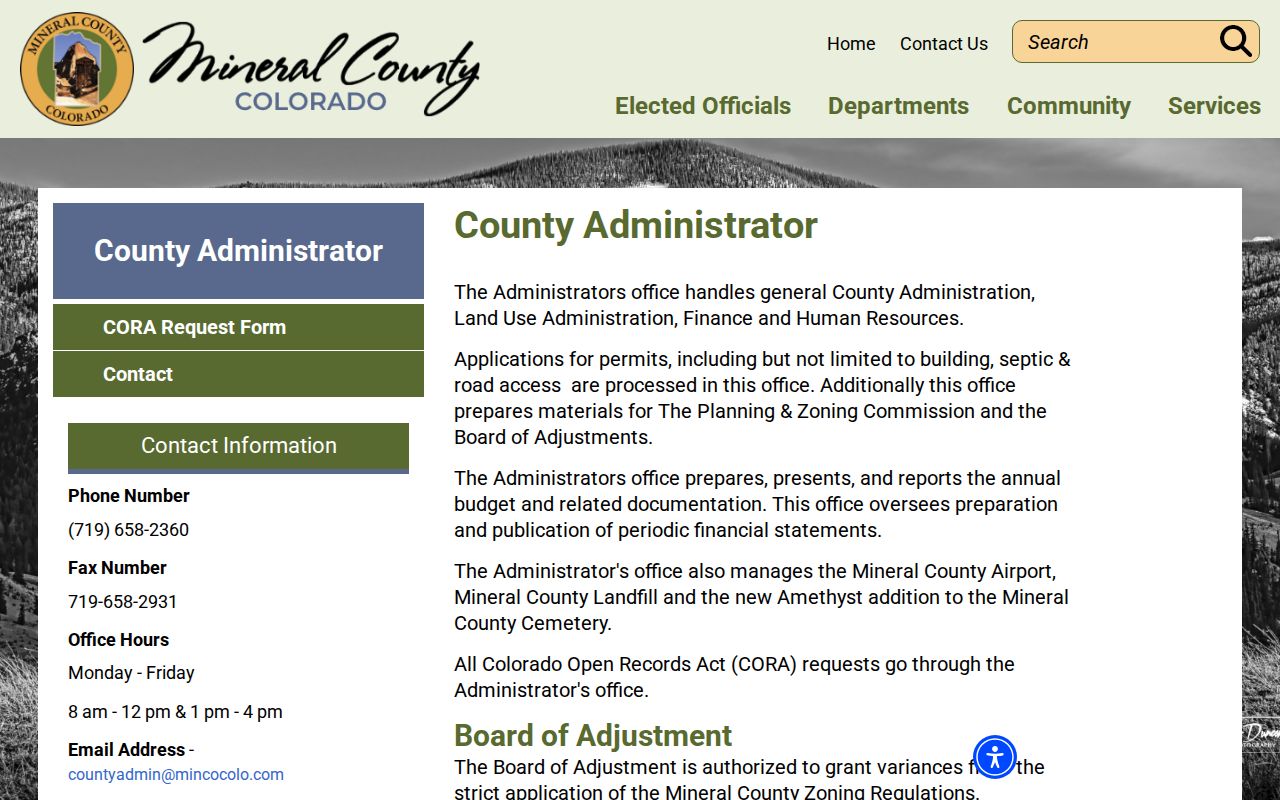
That page covers request routing only, not arrests or bookings.
Regional Jail Records May Shift
Where a Mineral County arrestee lands overnight is not permanent. A 2025 Alamosa County meeting record described worsening conditions at the Rio Grande jail. It also pushed for a new facility. That proves nothing about any single person's custody. It does warn against treating one regional destination as fixed. Ask Mineral County which jail received the person during your dates. Then go to that custodian.
The JailExchange Mineral directory is a secondary lead noting a Rio Grande transfer arrangement.
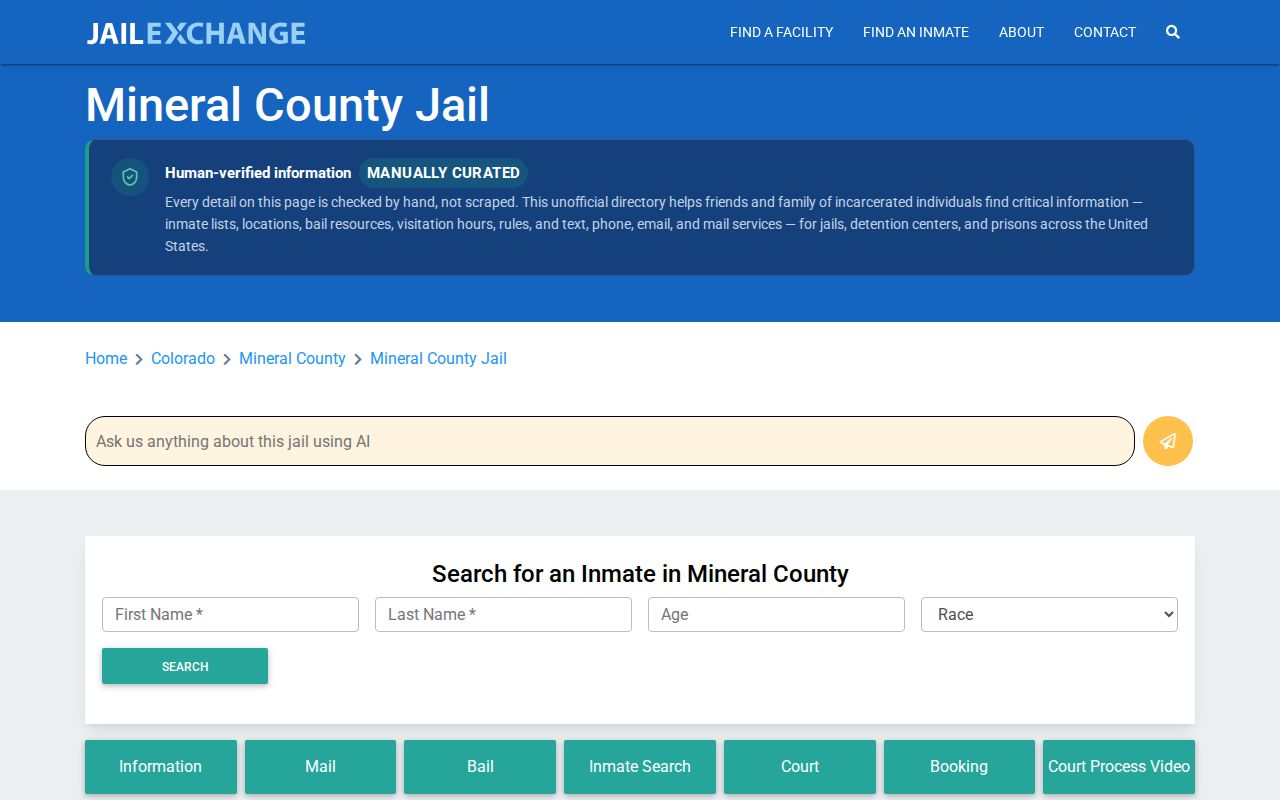
Since that directory is unofficial, confirm the facility claim with Mineral County for your specific week.
Weekly News Is Not a Blotter
The Mineral County Miner runs weekly and sometimes covers an arrest, court matter, or jail story. It prints no stable booking page, photo feed, or searchable archive. A Thursday issue date will also differ from the incident and arrest dates behind any story.
Regional outlets pick and choose as well. Before leaning on an article, line up its publication date, incident date, arresting agency, case number, and any custody claim against official records. News can point you to a Mineral County case. It cannot deliver a complete weekly arrest count or current detention status. As for third-party booking sites, none offers a reliable Colorado Mineral County section on RecentlyBooked, Busted Newspaper, Mugshots.com, Arrests.org, or Mugshots.zone. Watch for same-name results from Mineral County, West Virginia. Those are not local.
Mineral Court Follow-Up
The Mineral Combined Court sits in Colorado's 12th Judicial District. Its docket is not a custody tool. Instead, the court shows what happened after an arrest in Mineral County. Complaints, hearings, and final outcomes all appear there. Searching works best by date and county. Then match the case number to the booking record. A weekly arrest log can go stale. Charges get reduced or dropped, a sealing order can close public access, and diversion or a deferred judgment can rewrite the story. Treat an old entry as history rather than the current state of a Mineral County case.
Mineral Arrest Archives and Retention
Mineral County has no booking retention schedule. No roster archive or photo archive exists either. How far back an arrest record survives is an open question. Don't guess. Ask the county and the receiving jail directly. Ask for the record-series title, governing schedule, dates held, search keys, photograph rule, and whether the record was transferred, sealed, archived, or lawfully destroyed.
The Colorado State Archives holds old prisoner files. Creede material sits there too. Modern Mineral bookings do not flow there automatically. Current arrest records belong with the arresting or receiving agency, court outcomes with the Judicial Branch, and later state-prison custody with the Colorado Department of Corrections.
Note: A statutory daily record open for inspection does not promise indefinite publication online.
Separate Repeat Entries from Arrests
One arrest can fill several rows in a week-long log. That trips people up. Local arrest, regional intake, bond review, court appearance, transfer, and release can each carry a different date in Mineral County records. Count each row and you will overcount arrests. Compare agency, incident number, booking number, charge code, and court case number instead.
Colorado arrest dashboards add trend context. They are not lists of people. Their totals also depend on reporting schedules. A filing count is not a booking count, and a jail entrance is not always a Mineral County arrest, so use dashboards only for totals their labels actually describe.
Ask whether a response covers the full date span. Ask whether another custodian holds related records. If an entry was withheld, sealed, transferred, or destroyed under a schedule, request the basis or the destination where disclosure rules allow.
Scope matters most. A log of Mineral arrests, a roster of everyone booked at one receiving jail, and a set of court filings overlap without being equal. A clear label keeps a regional booking out of the wrong county column. It also stops a late filing from becoming a false new arrest.
Public Record Search
Sponsored Results