
Mineral County Arrests Today
The Mineral County Sheriff comes first for any arrest made in the county. The page lists office and dispatch contacts. It posts no live roster, no booking table, and no mugshot gallery. Treat that gap as a gap, not as proof that nobody was arrested. Regional housing explains the split. The sheriff often keeps the incident record. A receiving jail keeps the custody record. Secondary sources point to Rio Grande County Jail in Del Norte as the destination. That arrangement has changed before. Confirm each time. An arrest time and a jail entrance time can describe two separate events.
Check Mineral Arrests Step by Step
Official channels come first. The sheriff's office answers at (719) 658-2600 during normal office hours. After hours, Alamosa Dispatch takes non-emergency calls for Mineral County first-response agencies at (719) 589-5807. Reserve 911 for true emergencies.
- Ask the Mineral County Sheriff whether the agency made or documented the arrest. Request the date, agency, and record identifier.
- Ask where the person was taken. Confirm custody with the named receiving facility rather than assuming Rio Grande.
- Use VINELink Inmate Check as a supplemental search under all Colorado facilities and the possible regional jail.
- If no immediate answer is available, submit the county’s public-records request form.
- Use the Mineral Combined Court for later case events, not current custody.
The Mineral County recent arrests hub sorts out how booking, court, state-prison, and federal records differ. A docket can confirm a hearing or a filed case. It cannot tell you whether a person is still in custody.
Mineral Daily Arrest Record Fields
With no verified daily view online, these are the fields worth requesting and comparing. Colorado law makes a local jail keeper keep a daily record of confined people. The law does not force an online search. It does not force a photo either. Some details can be lawfully withheld.
| Field | Use |
|---|---|
| Arrest date and time | When custody began at the arresting-agency stage. |
| Entrance or booking time | Intake at the receiving facility, which may occur later. |
| Agency and jurisdiction | Separates a Mineral arrest from a regional jail entry. |
| Record number | Matches records without relying on a name alone. |
| Charges as booked | Charges at intake. |
| Bond and holds | An amount, bond type, or another agency’s detainer. |
| Release or transfer | Explains a move from the first facility. |
| Booking photo | Only if lawfully released; none is hosted here. |
A detainer is another agency's request to hold a person or get notified. It does not always mean a new charge. Match the agency, date, and record number before calling two entries one event.
Official Mineral Arrest Starting Point
The official Mineral County Sheriff page lists the contact routes to use when no daily feed exists.
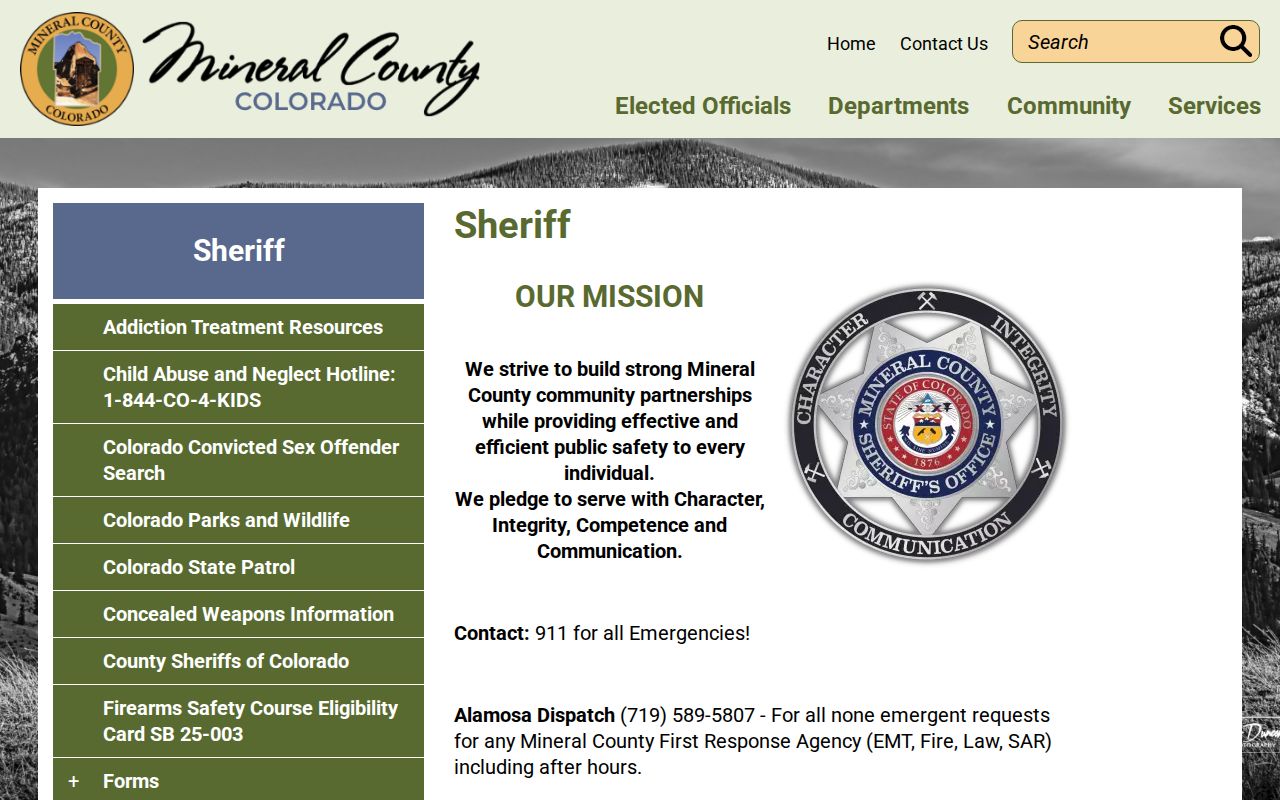
That page is a contact listing, not a roster. The JailExchange Mineral County directory offers a secondary lead on regional detention.
Treat that unofficial directory as a prompt to call the agency directly. It cannot confirm current custody or replace an official record.
Why Mineral Bookings Can Lag
A same-day search can miss a Mineral County arrest entirely. Processing and transport take time. Booking at the receiving jail takes time too. Historical court material shows transport from Mineral County to Rio Grande County. It happened later on the arrest day itself. That history explains the delay, not the exact placement for each person now. Distance, weather, and agency workflow separate the timestamps. Write down what each source calls its time field. Booked, received, arrested, and entered are not the same thing. If a result appears later, it may be the downstream record of one event. It may not be a second arrest. Note: An empty online result cannot prove release, transfer, or that no arrest occurred in Mineral County.
No Mineral Booking App Found
The sheriff lists no booking app. There is no official social feed for daily arrests either. The sheriff page stays the primary local reference. Even if an official account later posts selected incidents, those posts are not a roster. The agency must define them as a roster. It must also state the update window. VINELink can track one identified person after intake, though local participation is not confirmed. Search Colorado facilities, use the destination the sheriff supplies, then call the responsible agency. The Weekly Arrest Log explains how to reconstruct several days. It helps when a same-day answer is not enough.
Request a Mineral Arrest Record
The county administrator routes Colorado Open Records Act requests. Criminal justice records may fall under the Colorado Criminal Justice Records Act instead. Mineral County requires its official form, sent to the official custodian. Email does not count unless the custodian accepts it. Confirm delivery first. Describe the dates, the person, the agency, the record number, and each item sought. Ask for the arrest report and entrance record. Also request the transfer and release fields. Request a booking photo only if the office can lawfully release one. The policy allows three working days for inspection. An extension of seven working days is also possible under the policy. Copies run $0.25 per page. Retrieval can cost up to $30 per hour after the first hour.
Mineral County Sheriff’s OfficeP.O. Box 454
Creede, CO 81130
(719) 658-2600
Non-emergency dispatch: (719) 589-5807
Arrest Charges Are Accusations
Booking data records what an agency alleged at intake, nothing more. A prosecutor can amend or decline a charge. A court can dismiss the case or enter a different formal outcome. That outcome is called the disposition. Check the case number through the Judicial Branch when the result matters.
Confirm identity through more than a similar name. Never infer present custody from an old entry. The sheriff, the receiving jail, and the court can verify each part of the record.
Mineral Arrest Custody States
Which custody state you are checking shapes the answer you get. Was the person just arrested? Start with the arresting agency. Booked means the receiving office has finished its paperwork. In custody points to where the person sits right now. Released signals a change, while transferred means another agency or facility has taken control. These labels each carry their own meaning, so treat them as distinct rather than folding them into a single status.
A name can drop off a short roster after release even though the arrest report and the court file live on. A sentence to state prison moves the person into the Colorado Department of Corrections system. Federal custody belongs on federal locators, not a county feed. Ask each source to state the status and the exact moment it was confirmed. That habit keeps yesterday's Mineral County booking from being mistaken for current custody today.
Booking photos are a separate matter. Colorado law regulates how booking photographs are handled. Avoid any photo tied to a pay-to-remove publication. If a lawful photo is released, it shows a past booking and nothing more.
The daily record described by C.R.S. § 17-26-118 can list the entrance date, identity fields, charges by code and jurisdiction, bond, and release date. Public inspection at reasonable hours does not require a web feed. When a Mineral arrest leads to custody in another county, ask which office actually keeps that record.
Release is not the end of the case. Bond lets a person walk out while the matter moves forward. Transfer shifts custody without freeing anyone. A court commitment may reflect a judge's order rather than a fresh street arrest. Each status needs its own source and its own timestamp.
Give the office a narrow date range and enough identifying detail to avoid a mistaken match. Ask staff to spell the facility name and repeat any record number back. Do not press for protected victim, juvenile, medical, or investigative details. If access is lawfully denied or redacted, document that response instead of guessing at what the gap contains.
Public Record Search
Sponsored Results